


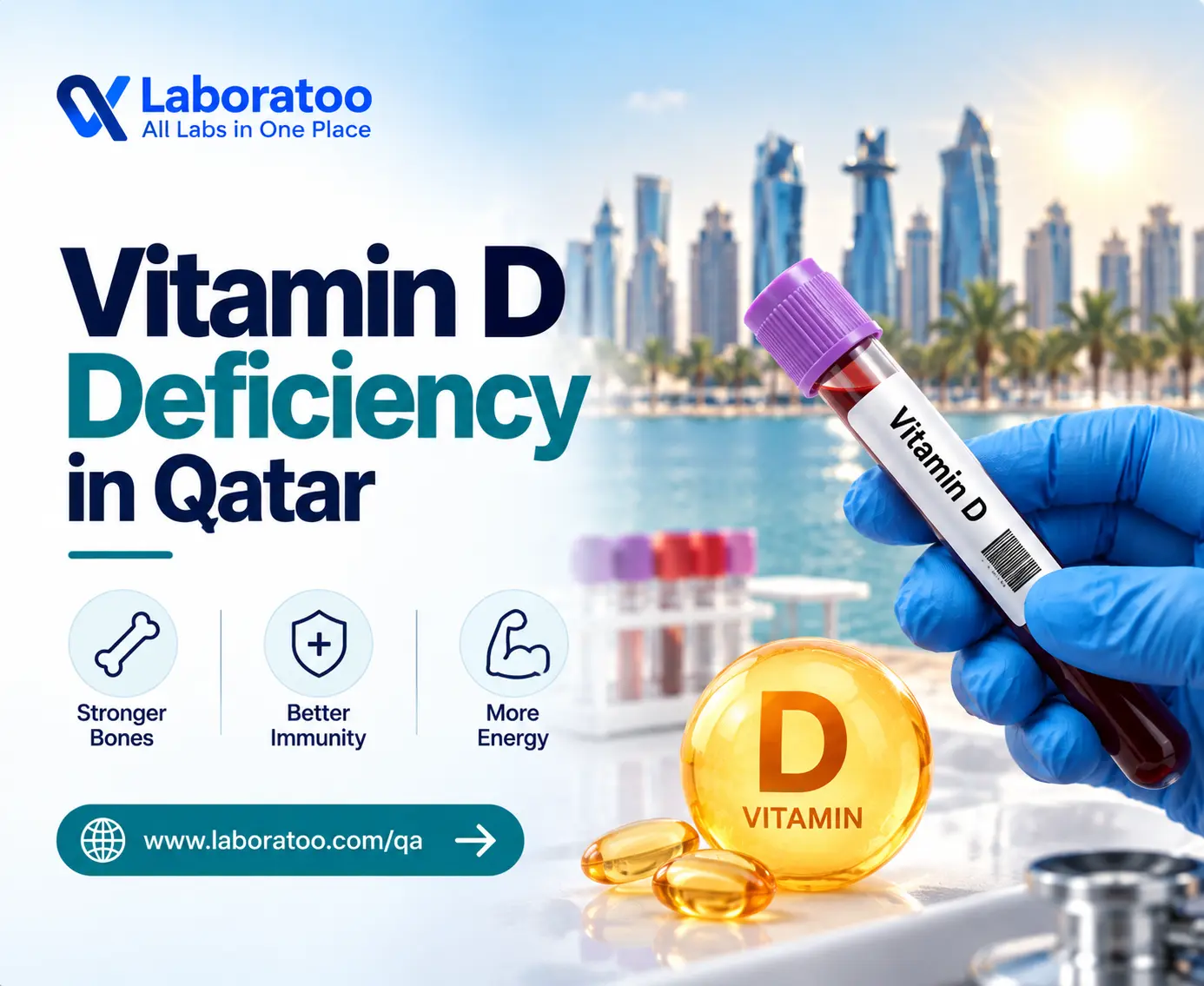
Qatar gets over 300 days of sunshine a year. So why is Vitamin D deficiency one of the most common health findings in the country?
If you've been feeling unusually tired, achy, or just "off" and you've never had your Vitamin D checked this is worth reading.
The Sunshine Paradox
Most people assume living in a sunny country means you're getting plenty of Vitamin D. It's a logical assumption. It's also wrong at least for most expats living in Qatar.
Here's the reality:
- You're indoors most of the day. Air-conditioned offices, malls, cars, and apartments mean you're rarely exposed to direct sunlight for meaningful stretches.
- When you are outside, you're covered up. Whether for cultural reasons, sun protection, or just avoiding the heat, arms, legs, and neck are usually covered.
- Qatar's UV angle matters. For a few months of the year, the sun's angle means your skin produces very little Vitamin D even with direct exposure.
- Sunscreen blocks production. SPF 30 reduces Vitamin D synthesis by up to 95%. Necessary for skin protection but it comes at a cost.
The result? Millions of people live under a blazing sun, chronically deficient in the vitamin that sun is supposed to provide.
How Common Is It in Qatar?
Very. Studies across the Gulf region consistently show Vitamin D deficiency rates of 60–90% in the general population including expats, not just nationals.
It affects:
- Office workers who commute by car
- Women who cover up outdoors
- People who exercise indoors (gyms, not parks)
- Children spending long hours in school and indoors
- Anyone who moved to Qatar from a country where they were already borderline deficient
- In short: almost everyone is at risk.
What Does Vitamin D Actually Do?
Vitamin D is less a vitamin and more a hormone. It affects systems throughout the body that most people don't connect to sun exposure:
- Bone health — regulates calcium absorption; deficiency leads to bone pain and long-term density loss
- Immune function — low Vitamin D is linked to more frequent infections and slower recovery
- Mood and energy — deficiency is strongly associated with fatigue, low mood, and brain fog
- Muscle function — unexplained muscle weakness is a classic sign
- Cardiovascular health — emerging evidence links chronic deficiency to heart health markers
The tricky part: most of these symptoms are vague. Tiredness, low mood, general achiness — easy to dismiss as stress or overwork. Many people in Qatar go years without knowing.
Symptoms That Are Easy to Dismiss
You might have Vitamin D deficiency if you're experiencing:
- Persistent fatigue even after a full night's sleep
- Bone or joint pain (especially lower back)
- Frequent colds or infections
- Hair loss
- Low mood or mild depression
- Muscle weakness or cramps
- Difficulty concentrating
None of these are dramatic. That's exactly why deficiency goes undetected for so long.
The Only Way to Know Is to Test
Symptoms are unreliable. The only way to confirm Vitamin D deficiency is a blood test — specifically a 25-OH Vitamin D test.
It's a simple blood draw. Results usually come back within 24 hours.
What the numbers mean:
Most expats in Qatar who test for the first time land in the deficient or insufficient range — even those who feel fine.
What Happens After You Test?
If you're deficient, your doctor will typically recommend:
- Oral supplementation — high-dose Vitamin D3 (cholecalciferol) for a loading period, then maintenance dose
- Dietary adjustments — fatty fish, egg yolks, fortified foods (though diet alone rarely fixes deficiency)
- Retesting — usually after 8–12 weeks of supplementation to check levels
Do not self-prescribe high-dose supplements without testing first. Vitamin D toxicity is rare but real — you need to know your baseline before supplementing aggressively.
Who Should Test?
Short answer: almost everyone living in Qatar who hasn't tested in the last 12 months.
Especially:
- Expats who've been in Qatar more than 6 months
- Anyone with persistent fatigue or low energy
- Women (deficiency rates are higher)
- Anyone over 40
- People with darker skin (melanin reduces Vitamin D synthesis)
- Anyone who spends most of the day indoors
Qatar's sunshine is real. But for most expats, it's not translating into adequate Vitamin D — because modern life in Doha keeps you indoors, covered, and air-conditioned for the majority of your waking hours.
A simple blood test takes 5 minutes and tells you exactly where you stand. If you've never checked, it's probably time.
Book a Vitamin D test in Qatar
Already tested and want to understand your results? Contact us or explore other available tests on Laboratoo.
Write a Comment