


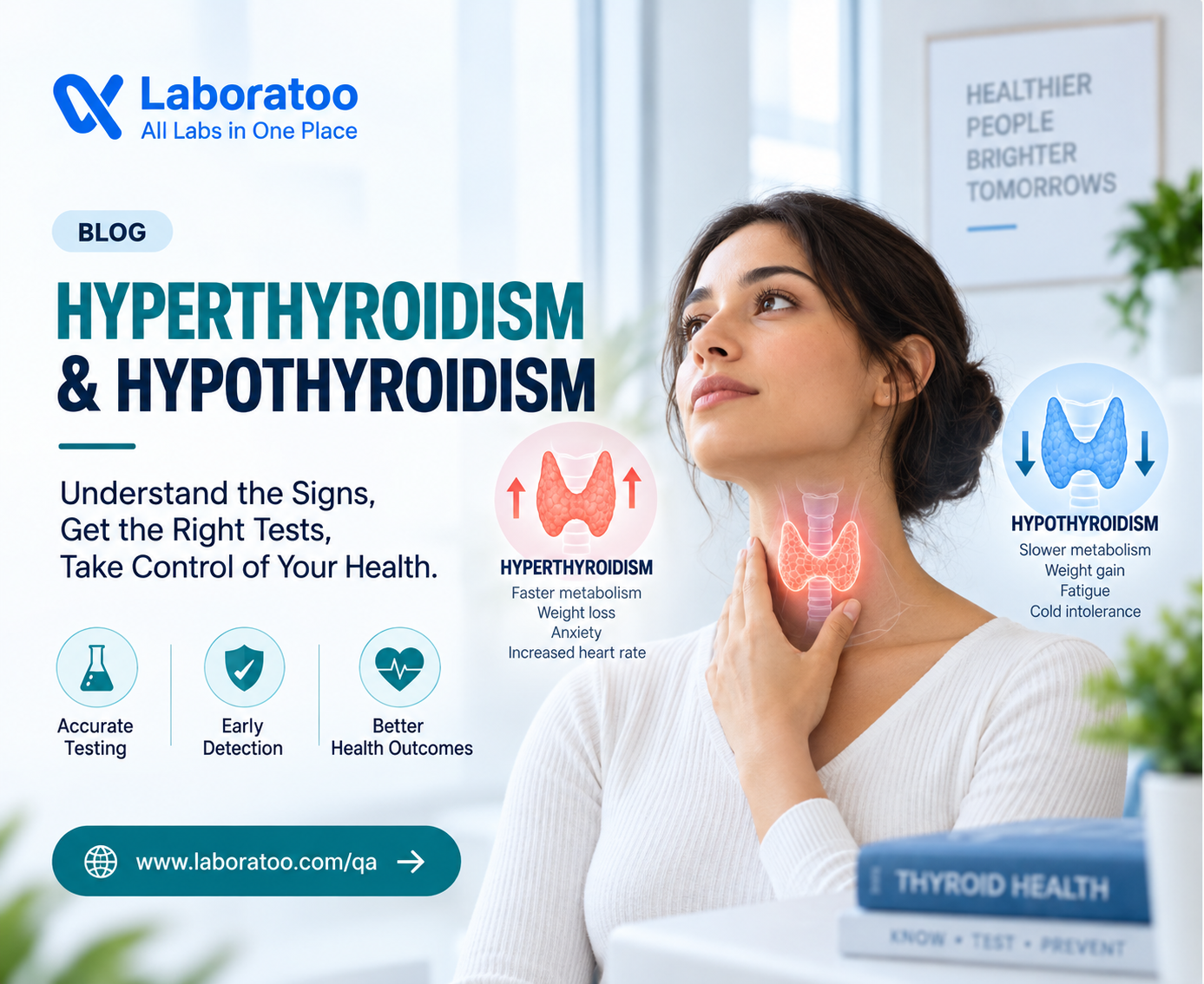
Your thyroid may be small, but it plays an important role in how your body functions. Located at the front of your neck, the thyroid gland produces hormones that help regulate metabolism, energy levels, heart rate, body temperature, and many other processes.
When the thyroid produces too much or too little hormone, two common conditions can develop: hyperthyroidism and hypothyroidism.
Understanding the difference—and getting the right thyroid blood tests—can help identify problems early.
What Is Hyperthyroidism?
Hyperthyroidism, also known as an overactive thyroid, occurs when the thyroid gland produces more thyroid hormones than your body needs. This can cause many body processes to speed up.
Common symptoms may include:
- Unexplained weight loss despite a normal or increased appetite
- Rapid or irregular heartbeat
- Anxiety, nervousness, or irritability
- Increased sweating and sensitivity to heat
- Shaking or trembling hands
- Difficulty sleeping
- Muscle weakness
- Frequent bowel movements
- Fatigue
One of the most common causes of hyperthyroidism is Graves’ disease, an autoimmune condition. Other causes can include thyroid nodules, thyroid inflammation, or certain medications.
What Is Hypothyroidism?
Hypothyroidism, or an underactive thyroid, occurs when the thyroid does not produce enough thyroid hormones. As a result, many processes in the body can slow down.
Symptoms can develop gradually and may include:
- Fatigue or low energy
- Unexplained weight gain
- Feeling unusually cold
- Dry skin
- Constipation
- Muscle weakness or aches
- Difficulty concentrating
- Low mood
- Hair thinning
- Changes in menstrual periods
- Slower heart rate
A common cause is Hashimoto’s thyroiditis, an autoimmune condition in which the immune system attacks the thyroid gland. Other possible causes include thyroid surgery, certain medications, iodine-related problems, and some medical treatments.
Hyperthyroidism vs Hypothyroidism
Although both conditions involve the same gland, they generally affect the body in opposite ways.
With hyperthyroidism, metabolism tends to accelerate. A person may experience weight loss, heat intolerance, increased heart rate, sweating, and anxiety.
With hypothyroidism, metabolism tends to slow. Weight gain, cold intolerance, tiredness, dry skin, and constipation are more common.
However, symptoms alone cannot reliably diagnose a thyroid disorder. Many thyroid symptoms overlap with other health conditions, which is why laboratory testing is important.
Which Blood Tests Check Thyroid Function?
The first test commonly used to assess thyroid function is TSH (thyroid-stimulating hormone).
Additional tests may include Free T4 (FT4) and Free T3 (FT3) to measure circulating thyroid hormones.
In general, a low TSH with elevated thyroid hormones may suggest hyperthyroidism, while a high TSH with low thyroid hormone levels may suggest primary hypothyroidism. Results should always be interpreted in context by a qualified healthcare professional.
Doctors may also request thyroid antibody tests, such as TPO antibodies or TSH receptor antibodies, when an autoimmune thyroid condition is suspected.
When Should You Consider a Thyroid Test?
Consider speaking with a healthcare professional if you have persistent unexplained fatigue, significant weight changes, heart-rate changes, unusual sensitivity to heat or cold, hair changes, menstrual irregularities, or other symptoms associated with thyroid dysfunction.
Testing may also be recommended based on your medical history, medications, pregnancy status, family history, or previous thyroid results.
Check Your Thyroid Health in Qatar
A simple blood test can provide valuable information about how your thyroid is functioning.
Through Laboratoo, you can compare and book thyroid blood tests and health packages from diagnostic providers in Qatar—all in one place.
Know your symptoms. Get the right tests. Understand your health.
Write a Comment